Magnificat
The Magnificat (Luke 1:46-55), also known as the Canticle of Mary, is the Blessed Virgin Mary’s hymn of praise to the Lord when she visited her cousin Elizabeth, who herself was soon to become the mother of John the Baptist.
We recognize the Magnificat by its famous first two lines — My soul magnifies the Lord; my spirit rejoices in God my saviour – in which Mary proclaims the Lord’s greatness with characteristic humility and grace.
The Magnificat is an ecstasy of praise for the inestimable favour bestowed by God on the Virgin, for the mercies shown to Israel, and for the fulfillment of the promises God made to Abraham and to the patriarchs to save His Chosen People.

The Magnificat, which has become a Christian song of thanksgiving, lends itself to be the prayer of those who have suffered but have never lost their hope in God. The entire prayer of the Old Testament converges upon this one, but with a wholly renewed power.
In this respect, we may regard the Magnificat as representing the link or transition between the old and the new testaments in the economy of salvation. That is, the Magnificat being part and parcel of the incarnation by which God fulfilled His promises to His chosen people.
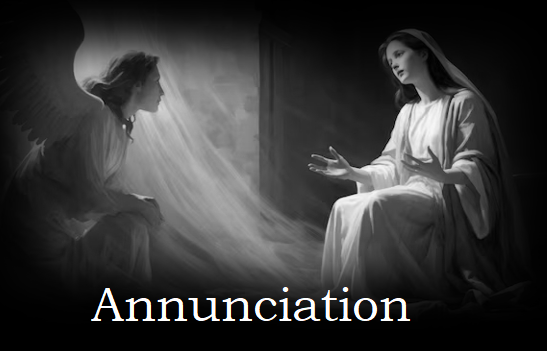
After Mary gives her famous consent to becoming the Mother of God, — “Behold I am the handmaid of the Lord; be it done to me according to thy word” (Luke 1:38) — she goes “with haste” (1:39) to help Elizabeth, who is delighted to see her. Our Lady then expresses her joy in the Magnificat.
Mary glorifies the Lord in “magnifying His goodness and love. By becoming the Mother of God she will help Him redeem us for our salvation in His Passion!
Mary’s joyful claim that “all generations shall call me blessed” in no way takes away from her humility. If she seems to boast here, it is much as St. Paul does later on in scripture when he says “whoever boasts, should boast in the Lord” (2 Cor 10:17), that is to say, in God’s work being done through us.
In this regard, the Magnificat is more than a prayer of praise. It also reminds us about the essential link between humility and holiness. Just as God has “regarded the lowliness of his handmaid” and “has done great things” for Mary in making her the Mother of his Son, so too “he has put down the mighty from their thrones and has exalted the lowly.”
Notice that the first part of the Hail Mary prayer comes from Scripture passages from St Luke that we have been considering. The prayer begins with the salutation of the angel Gabriel: Hail Mary, full of grace, the Lord is with thee. This is followed by the salutation of Elizabeth at the Visitation: Blessed art thou among women, and blessed is the fruit of thy womb, to which we add, Jesus.
As St. Ambrose once said in referring to this wonderful prayer, “Let Mary’s soul be in us to glorify the Lord; let her spirit be in us that we may rejoice in God our Saviour.”