Catholics and the Church
When we profess, “I believe in the Holy Catholic Church,” we mean the people God gathers in the whole world, who profess the same faith, participate in the same sacraments, and who submit to the Holy Father and the bishops in the line of succession from St Peter and the apostles whom Christ first appointed.
The Church contains the fullness of God’s eternal plan of salvation for the human race.
The word ‘Church’ comes from the German word kirche, which means “what belongs to the Lord.” Both “church” and “kirche” derive from Kyriake, the Greek word for “Sunday”, the Lord’s Day.
“The Church”, however, has a deeper theological meaning found in the Greek word ekklesia. In the Old Testament, this term means “the ones who are called out,” and denotes the “assembly” (or convocation [see Leviticus 23:1]) of the Chosen People before God. [CCC 751]
The Lord said to Moses, “These are the appointed feasts of the Lord, the holy convocations, which you shall proclaim at the time appointed to them.” (Lev 23:1)
The word Catholic (universal) comes from the Greek word kataholos, which means “according to” (kata) “the whole” (holos). The Church is catholic because it is the same regardless of where or when it is seen.
The Church is founded by Jesus Christ. It is composed of members who have died with him in baptism, and who share in his resurrection in the power of the Holy Spirit.
Christ is the head of his Church, and we are its members in communion with him, thus forming one “Body in Christ.”
The Church is born primarily of Christ’s total self-giving for our salvation, anticipated in the institution of the Eucharist [Last Supper] and fulfilled on the cross. The origin and growth of the Church are symbolized by the blood and water which flowed from the open side of the crucified Jesus. (CCC 763-766)
The Church was not founded by men, that is, it is not a man-made institution. Nor is the Church a noble human response to the work of salvation achieved by God in Christ, even if some of what we see has cultural expressions.
In this respect, the church in Southern Africa will appear different from the Church in Europe, South America, East Asia, and elsewhere. But these cultural differences are only traditions with a small ‘t’, and can be dispensed without any loss.
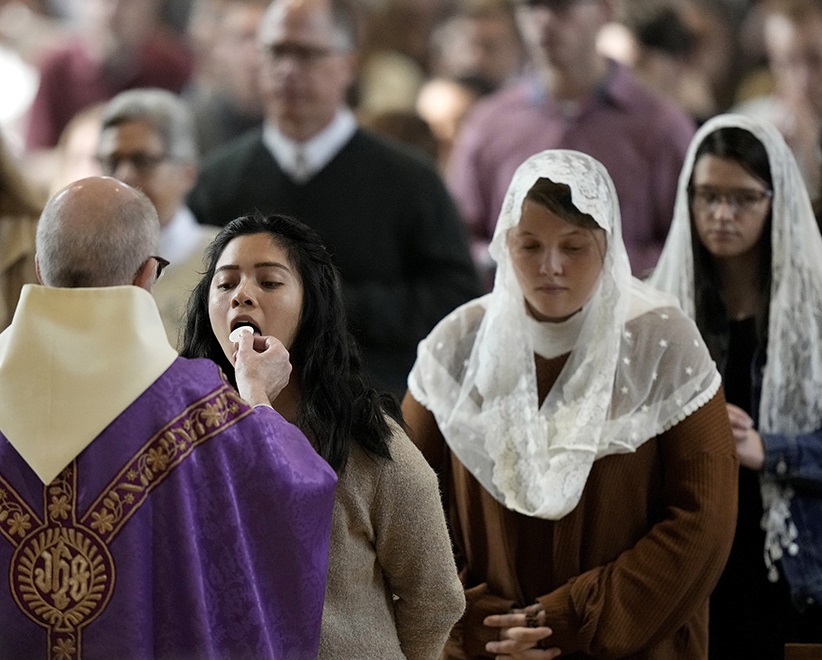
While the Church in the world as a whole is in union with its members in heaven and in purgatory. The Church is visible as many local liturgical assemblies, and as communities (parishes, monasteries).
Three meanings of “Church” are inseparable: liturgical assembly, local community, and the whole universal (i.e., catholic) community of believers.
“Because there is one bread, we who are many are one body, for we all partake in the one bread” (1 Cor. 10:17). Each assembly draws its life from the Word of God and the Eucharistic Body of Christ, and so herself becomes Christ’s Body [CCC 751-752].